
Have you ever seen your child’s eyes light up as they watch birds flying in the sky or small birds that come to your garden, and found yourself wanting to find out along with them: “What’s that bird’s name?” or “Why does it make that sound?”
Bird watching is a wonderful nature experience that can really spark your child’s curiosity and be enjoyed by parents and children alike.
Some parents may think, “Bird watching seems difficult…” or “You can’t enjoy it without specialized knowledge.”
But don’t worry!
Even if you don’t know the names of all the birds, bird watching can become much more fun and profound just by learning the “characteristics” of birds that are familiar to you.
This article will provide an easy-to-understand explanation of the diverse world of birds for parents and children who are just starting birdwatching.
With the theme of “It’s fun to know the species!”, we will introduce a method for roughly categorizing birds into groups based on “easy-to-remember characteristics” such as their appearance, lifestyle, and habits.
Just by knowing this simple classification, you and your children will be able to discover the “personalities” of birds and multiply the joy of discovery.
So, why not grab a pair of binoculars and start your new encounter with birds in the natural world around you?
- Make bird watching even more fun! The magic of “rough bird classification”
- 1.Why is “rough classification” recommended for beginners?
- 2.Discover the unique personalities of birds with “Birds”!
- Birds of Prey: Kings of the Skies! Mighty Hunters
- Small birds: Idols in your garden
- Songbirds: Birds with beautiful singing voices
- Waterfowl: Birds that enjoy life near water
- Skimmers: Birds that glide across the water
- Wading birds: long-legged birds that roam the water’s edge
- Climbing birds: masters of tree climbing
- Rattanas: Birds that run rather than fly
- Poultry: Birds that coexist with humans
- Wild birds: birds that enjoy freedom
- 3.Why this “rough classification” makes bird watching more interesting
- 4.Points to note and how to use “rough classification”
- Summary: Learn about the “personalities” of birds and feel closer to nature!
Make bird watching even more fun! The magic of “rough bird classification”
1.Why is “rough classification” recommended for beginners?
When you hear the term bird watching, you might be intimidated, thinking, “Do I have to memorize the names of hundreds of different birds from an illustrated book?”
However, apart from the strict biological classification of birds ( specialized groupings such as orders and families
; for example, humans are divided into detailed groups such as “Primates, Hominidae”), there is also a more intuitive and easy-to-understand “rough grouping.” This is the classification called ” birds,”
which we will introduce here .
This “〇 bird” classification is based on the “easily identifiable characteristics” that we see every day, such as the bird’s appearance, lifestyle, and habits. The great appeal of this classification is that
even without specialized knowledge, you can roughly imagine what kind of bird it is just by looking at the first kanji character of its name.
For example, when you hear “birds of prey,” you get the image of “strong-looking birds,” and when you hear “waterfowl,” you imagine “birds that live near water.”
In this way, by first learning about the general groupings, you will naturally become more aware of the characteristics of the bird in front of you and the kind of life it leads.
2.Discover the unique personalities of birds with “Birds”!
Now, let’s take a look at the actual classification of “birds.”
Knowing what bird groups each classification represents and what birds are representative will greatly broaden your birdwatching perspective.
Birds of Prey: Kings of the Skies! Mighty Hunters
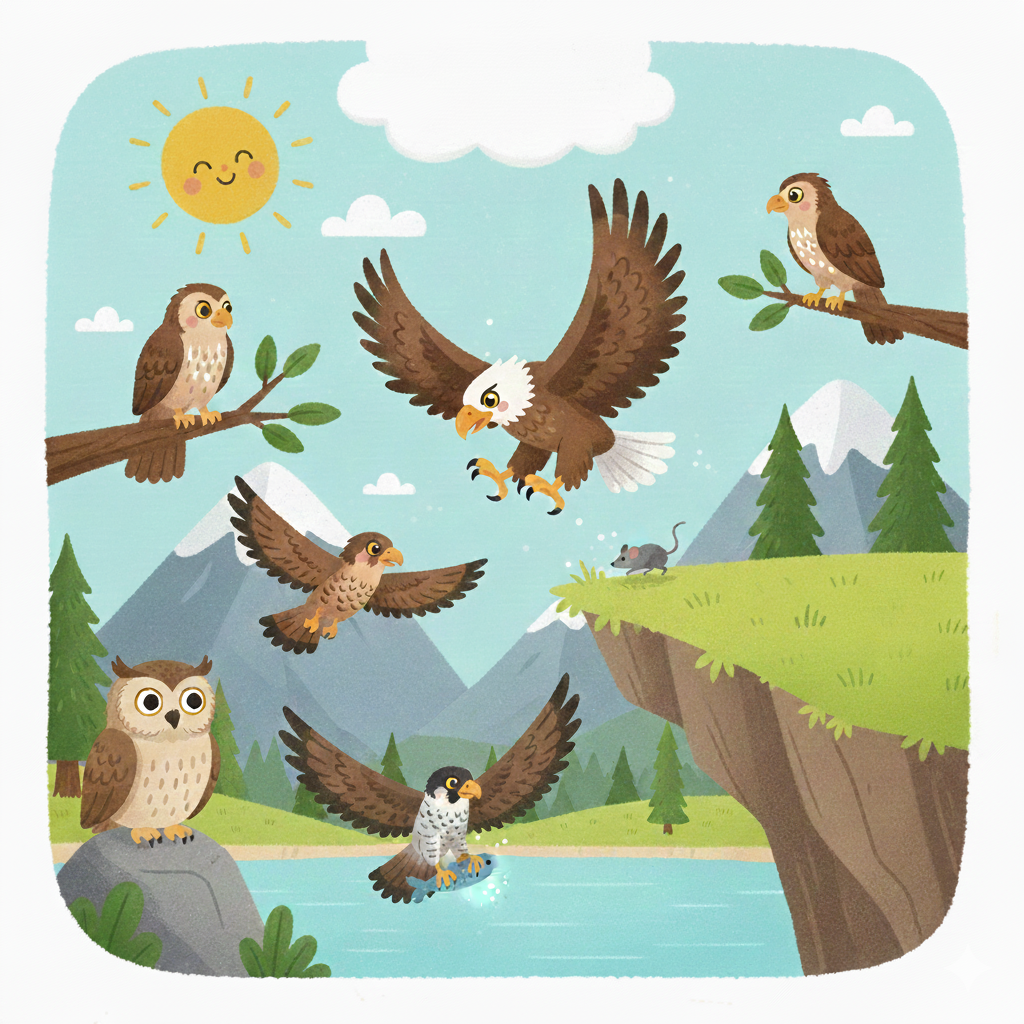
Meaning and Characteristics: As the kanji character “mou” (strong) indicates, this is a group of powerful birds that prey on animals using their sharp beaks and claws ( talons
: sharp, curved claws used to firmly grasp prey). They are truly worthy of being called “kings of the sky.”
They are master hunters, using their excellent eyesight to spot prey and swoop down to capture it.
Examples of common birds include eagles, hawks, owls, ospreys, and falcons.
If your child is playing in the park and spots a large bird flying leisurely in the sky, it may be a bird of prey.
Owls, in particular, are nocturnal, so they often stay still on tree branches during the day.
Small birds: Idols in your garden
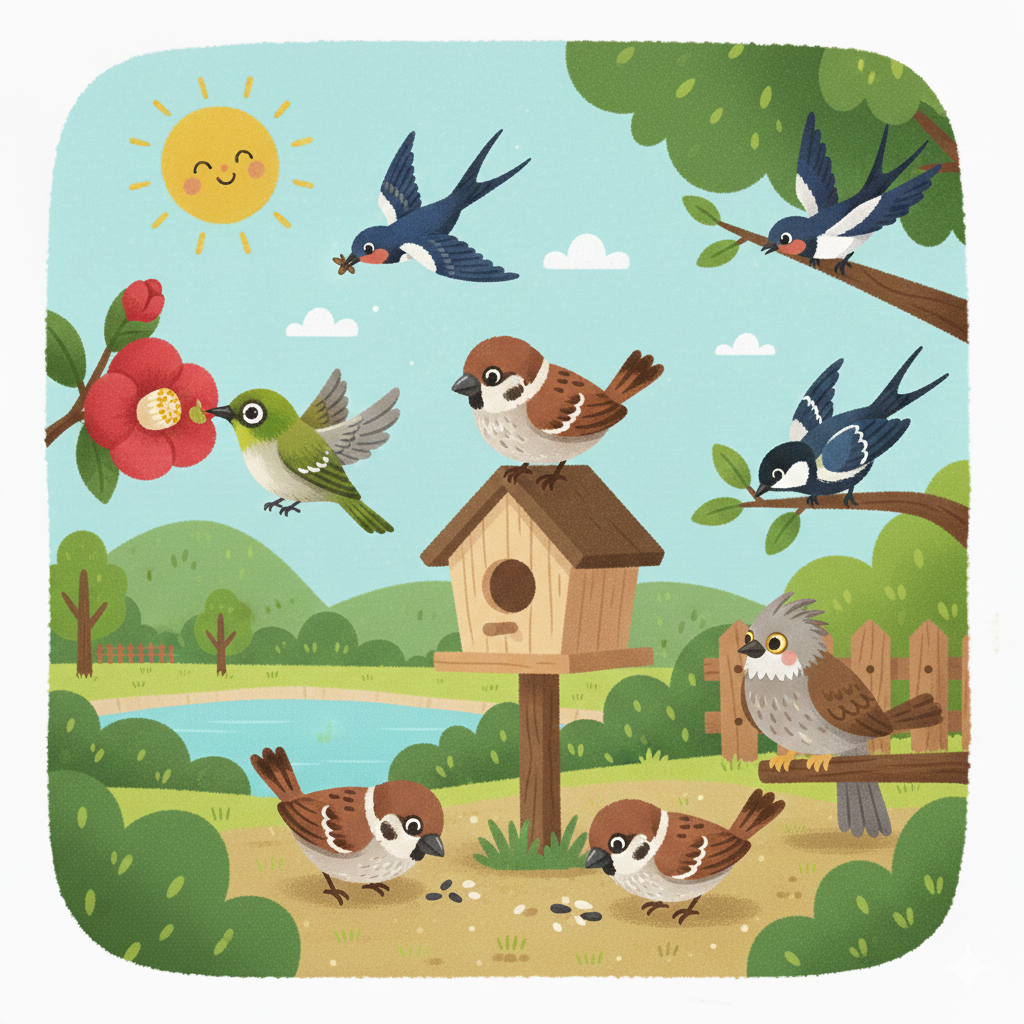
Meaning and Characteristics: As the kanji character “small” suggests, this is a general term for small birds.
Most of the birds we see in our daily lives that we call “small birds” fall into this group.
They are agile, darting about in bushes and on tree branches.
Examples of main birds: sparrows, Japanese white-eyes, great tits, brown-eared bulbuls, swallows, etc.
These small birds are the easiest to encounter in gardens and parks.
It’s also fun to find a flock of sparrows or observe Japanese white-eyes sucking nectar from flowers.
Songbirds: Birds with beautiful singing voices
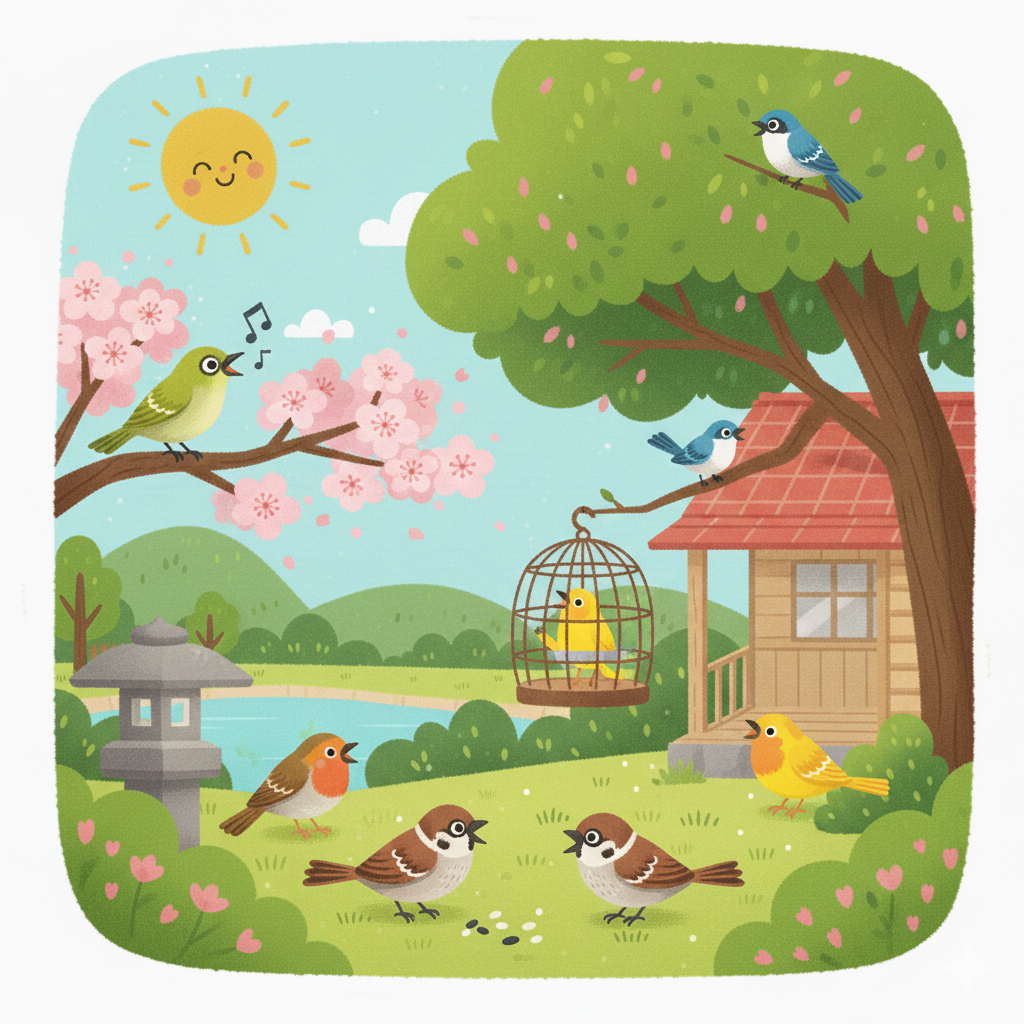
Meaning and Characteristics: As the kanji character “nari” (singing) suggests, this is a group of birds that sing with beautiful voices.
Males sing in a variety of beautiful tones to attract females and to assert their territory.
They sing especially actively in the spring, so be sure to listen carefully.
Examples of main birds include the Japanese bush warbler, canary, robin, and dusky thrush.
The song of the Japanese bush warbler, “hohokekkyo,” signals the arrival of spring in Japan.
One of the joys of bird watching is trying to find the source of the song that can be heard coming from the trees in the park.
Waterfowl: Birds that enjoy life near water
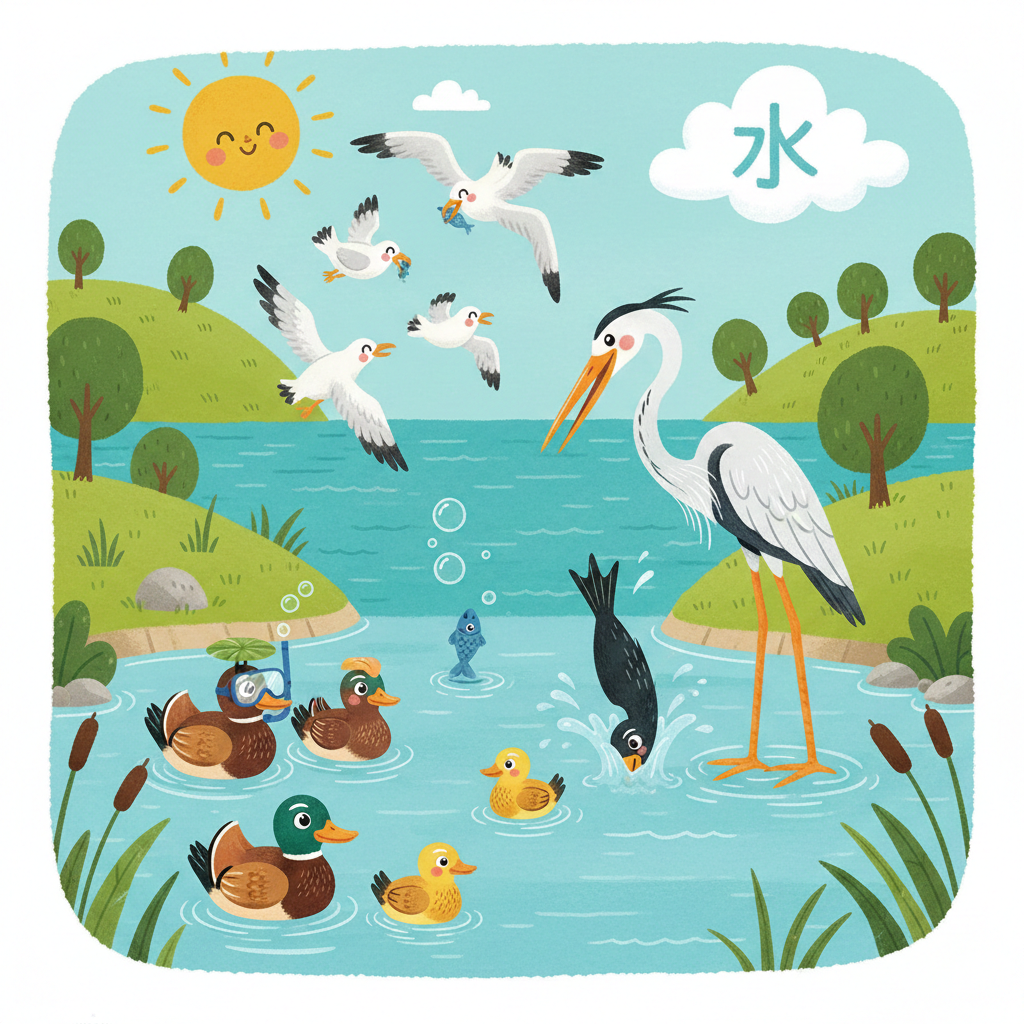
Meaning and Characteristics: As the kanji character for “water” suggests, this is a general term for birds that live near or on water.
They search for food and rest in places with water, such as ponds, lakes, rivers, and oceans.
It often refers to waterfowl and seabirds in general.
Examples of main birds: ducks, seagulls, herons, cormorants, etc.
You can encounter many waterfowl at the pond in a large park in your neighborhood or when you go to the seaside.
Just watching a flock of ducks floating on the water’s surface or a heron patiently waiting for prey by the water’s edge is soothing.
Skimmers: Birds that glide across the water
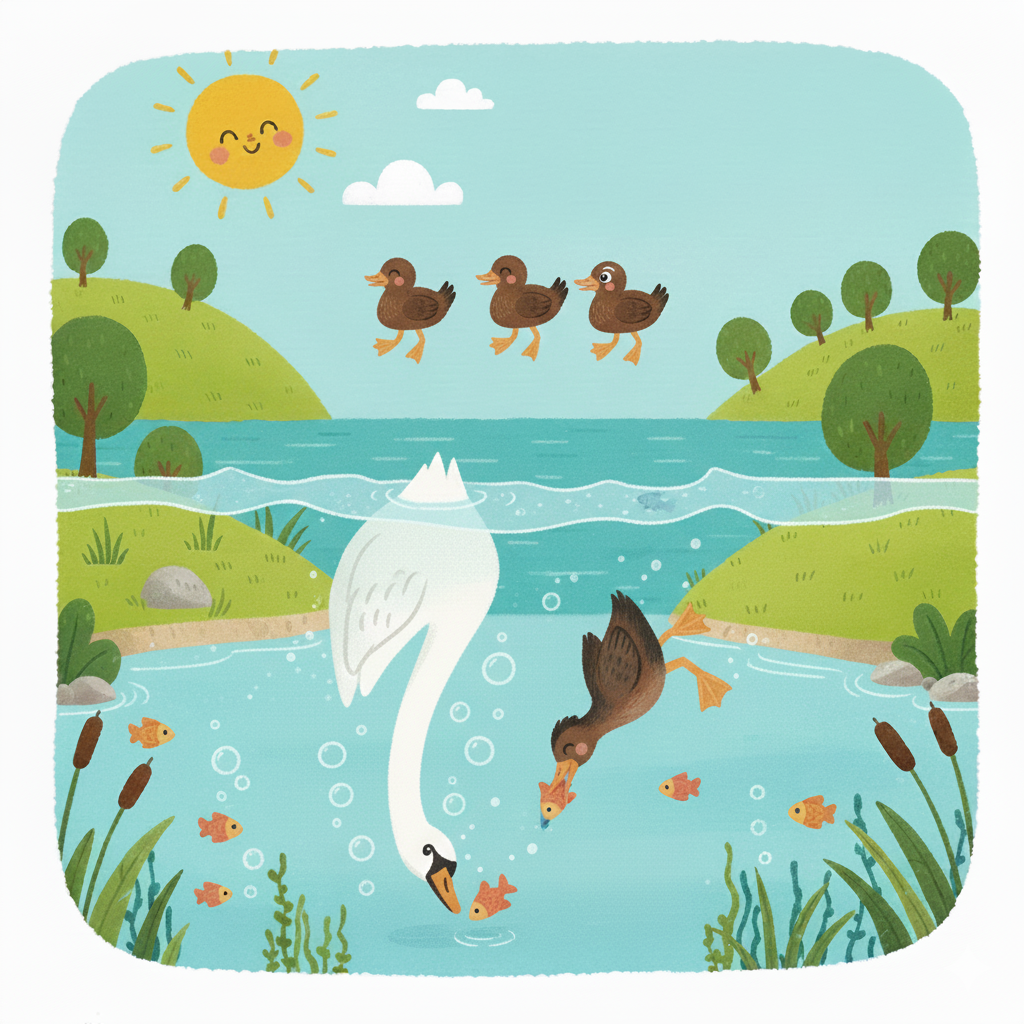
Meaning/Characteristics: This is a group of waterfowl that are particularly good at swimming.
They float on the water and swim skillfully using their webbed feet.
They use swimming to find food in the water and to rest in safe places.
Examples of main birds include ducks, swans, and grebes.
Your children will have fun discovering the sight of swans swimming gracefully in ponds and lakes, and grebes repeatedly diving and surfacing.
There is a lot of overlap between “water birds” and “fishing birds,” but it’s easy to understand if you think of fishing birds as birds that specialize in the trait of being good at swimming.
Wading birds: long-legged birds that roam the water’s edge
Meaning and Characteristics: The kanji character “wata” means “to walk,” and the birds in this group are good at walking around water’s edges to find food.
Many of them have long, slender legs and beaks.
They use their long legs to go into the water and their long beaks to find insects and small fish in the mud.
Examples of common birds include cranes, herons, plovers, and snipes. They are often seen in
rice fields, wetlands, and tidal flats ( a large area of sandy and muddy land that appears when the tide goes out, where many creatures such as crabs and shellfish live). The sight of a heron standing still on one leg and a snipe probing through the mud with its beak shows the unique appearances that have evolved to live near water.
Climbing birds: masters of tree climbing
Meaning and Characteristics: The kanji character “攀” means “to climb,” and the birds in this group are adapted to live by climbing trees.
Their toes are distinctively X-shaped (or two pointing forward and two pointing backward) so they can grip trees firmly.
They search for insects in trees and build nests in tree holes.
Examples of common birds include woodpeckers, parrots, and nuthatches.
If you hear a knocking sound on a tree trunk in the forest or woods, it may be a woodpecker.
The way they climb vertically up tree trunks is like a ninja, and your children will surely be amazed.
Rattanas: Birds that run rather than fly
Meaning and Characteristics: As the kanji character for “run” suggests, this is a group of birds that excel at running on the ground.
They are more specialized in running than flying, and some birds can barely fly at all.
They are characterized by their sturdy legs and well-developed leg muscles.
Examples of major birds: ostriches, emus, kiwis, etc.
You may have seen ostriches running around the vast grounds at the zoo.
They are large and move quickly to escape from predators or chase after food.
Poultry: Birds that coexist with humans
Meaning and Characteristics: As the kanji character for “house” suggests, this is a group of birds kept by humans. They have been domesticated by humans since ancient times for
their eggs, meat, and feathers ( feathers that cover the body of birds). Unlike wild birds, they have adapted to living in human habitats.
Some common bird examples are chickens, ducks, geese, and turkeys.
They can be found raised on ranches, farms, and sometimes even in homes.
The eggs and chicken sold in supermarkets come from these poultry.
Wild birds: birds that enjoy freedom
Meaning and Characteristics: As the kanji character “野” (wild) indicates, it refers to wild birds, or in other words, the opposite of “domestic birds,” and refers to birds that live freely in nature.
They are not bred by humans, but find food and raise their young on their own, living within the natural cycle.
Examples of main birds: All wild birds (all birds that live in nature, such as the raptors, small birds, songbirds, waterfowl, wading birds, flying birds, and ratites introduced above).
Most of the birds we encounter while bird watching belong to this wild bird category.
There are many wild birds in familiar places, such as birds perched in the trees of a park, birds lined up on power lines, and birds flying in the sky.
3.Why this “rough classification” makes bird watching more interesting
This classification of “bird species” does not cover all species like a bird encyclopedia, but it is a very useful tool for parents and children who are just starting to birdwatch.
(1) It’s fun because you can see the features at a glance!
Just by looking at the first kanji character of a bird’s name, you can roughly imagine its characteristics, such as “Does this bird live near water?” or “Is it good at flying?”
This gives you a clue as to what group of birds it belongs to, even when you come across a bird you’ve never seen before.
For example, if you spot a bird walking near water with its long, slender legs, you can guess, “Oh, is this a wading bird?”
(2) It’s easy for beginners to follow!
If you try to memorize detailed classifications (such as families and orders) straight away, you might get discouraged.
However, this “rough classification” allows you to roughly divide birds by appearance and lifestyle, making it easy to start bird watching. You can
also have fun playing quizzes with your children, asking “Which group does this bird belong to?”
(3) It’s inspiring to learn about the diverse lifestyles of birds!
You’ll realize that even birds, which are all in the same family, have completely different diets, habitats, and behaviors.
Some birds fly through the air, some swim in the water, and some live in the trees.
Learning about this diversity will help you to be impressed by the depth of the natural world and the unique adaptability of each creature. This will
further stimulate your child’s “why” questions and give them the joy of discovery as they say, “Oh, I see!”
4.Points to note and how to use “rough classification”
This “bird species” classification is merely a convenient grouping for everyday understanding and observation, and is different from the latest biological classifications (such as families and orders).
For example, ducks are both “water birds” and “game birds,” and herons are both “water birds” and “waders.”
In this way, one bird can fall into multiple “bird species.”
However, this is not a problem at all.
In fact, it is evidence of the diversity of bird lifestyles.
When bird watching with children, it is important to deepen their interest in birds by having fun conversations such as, “What are the characteristics of this bird?” and “Which group do you think it fits into?”, rather than getting caught up in strict classifications.
Make your own bird watching map! In a park or a nearby bird-rich area, create an original map with points marked for each rough classification of birds, such as “places where you can see birds of prey” or “places where you can see waterfowl.”
Keep a “Today’s Discovery Notebook”! Record the birds you find and note which bird species they belong to.
It’s also fun to draw illustrations and take notes on their calls.
Make a list of birds you want to find! Pick out birds you haven’t seen yet from each category and make them your next birdwatching goal.
Summary: Learn about the “personalities” of birds and feel closer to nature!
Just as you may have heard of the term “bird species,” this classification is actually used and is a simple and familiar way to categorize birds to help you understand their characteristics.
Birdwatching is a wonderful activity that allows you to enjoy the joy of discovering the diverse “personalities” of birds in the natural world around you, even if you don’t have any specialized knowledge.
By observing birds with your child while keeping this “rough classification” in mind, you’re sure to make many new discoveries you’ve never noticed before.
Pay attention to the unique characteristics of each bird, such as the sounds they make, the way they fly, how they catch food, and the beautiful colors of their feathers.
Doing so will surely foster a love for birds and a deep understanding of nature in your child’s heart.
So why not open the door to birdwatching with the whole family, listen to the birds’ songs, and experience together the drama of life unfolding in the sky, water, and forest?