On Konchan Net’s blog, “Little Fabre’s Insect Diary,” she shares with many people the joy of collecting and raising insects with her son.
This time, we will bring you an account of insect hunting on the Tama River riverbed in winter.
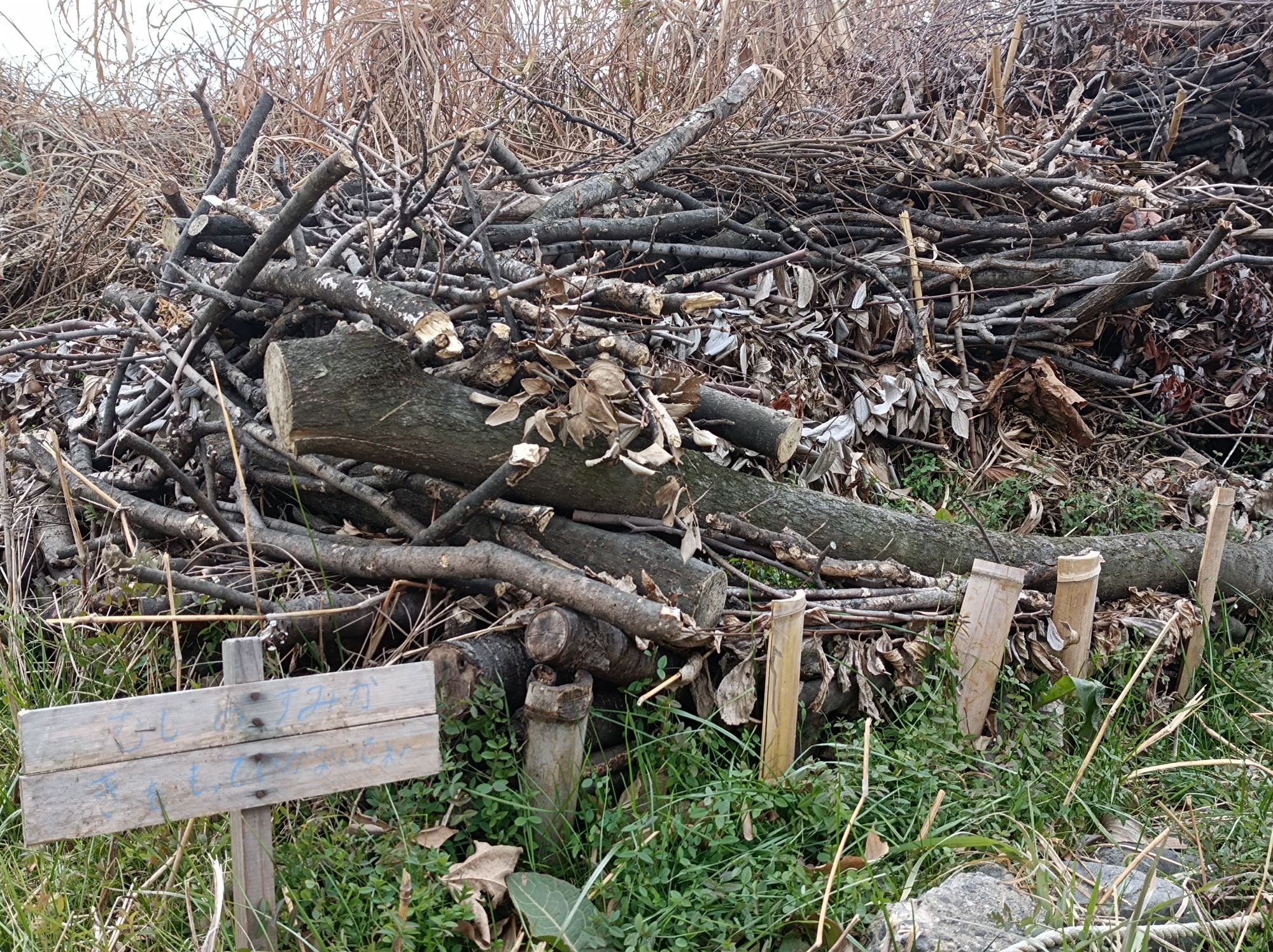
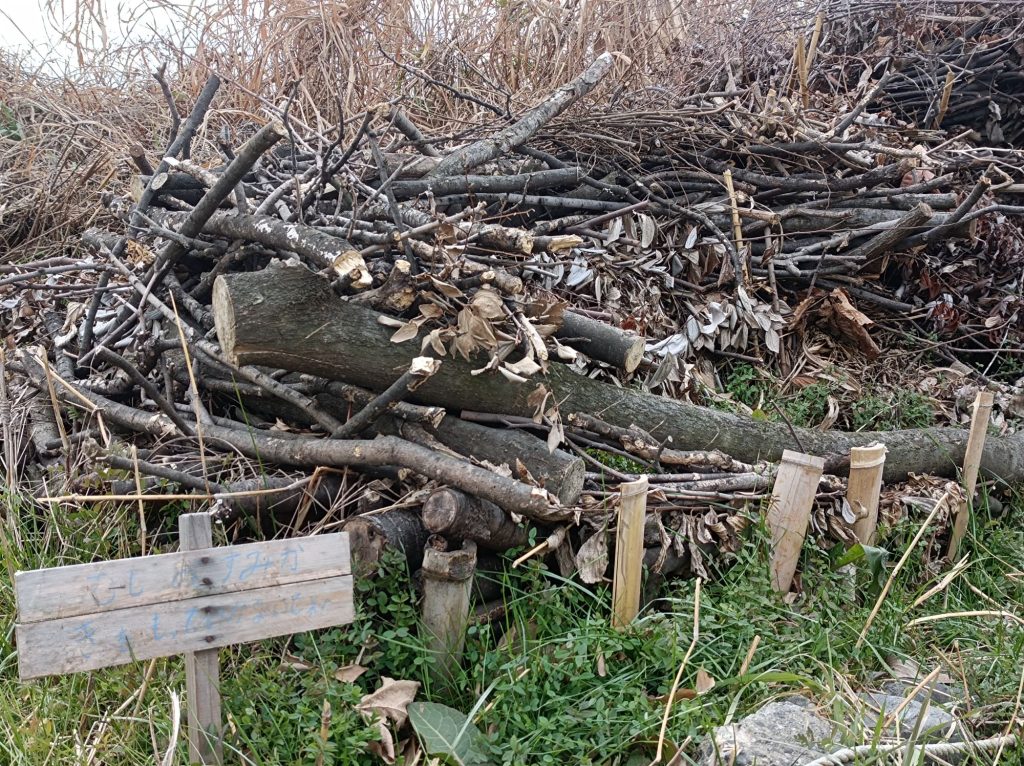
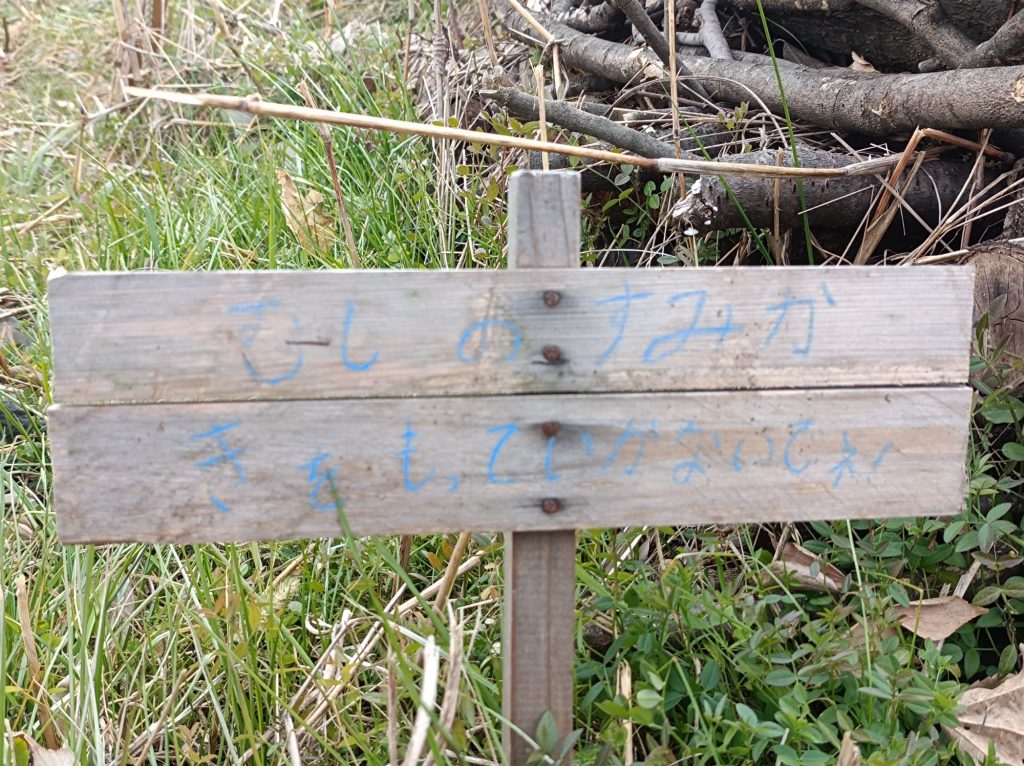
An insect habitat found on the Tama River riverbed
It seems that some children love insects. They have created a wonderful habitat for insects. I wonder what kind of insects live there? I will come back to see it again.
Mantis nest
I found some praying mantis eggs. Praying mantises lay many eggs in a tough, sponge-like pouch to create an egg sac.
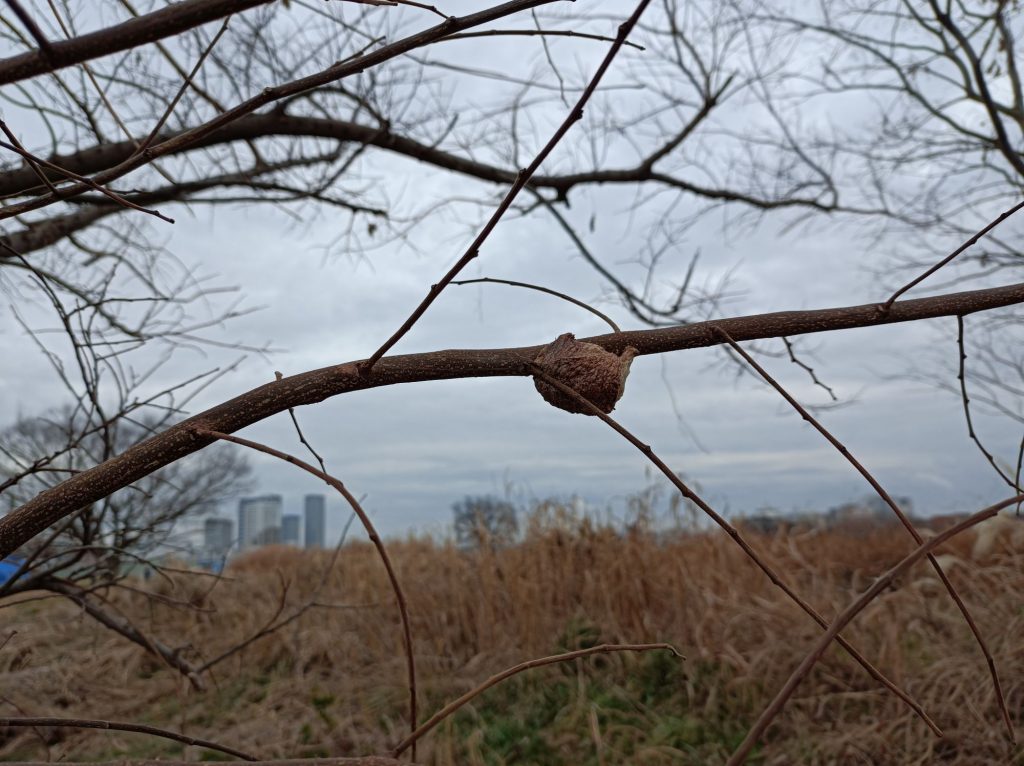
Winter is the best time to search for praying mantis egg sacs. The leaves fall off the trees, making it easier to find the egg sacs they build on the trees. I found over 20 in just a short search.
Tips for distinguishing the type of praying mantis from its egg sac
The egg sac I found was from a giant praying mantis or a Korean praying mantis.
When guessing the type of praying mantis from an egg sac, we take into account its size and shape, as well as the types of praying mantises found in the area (whether we have seen adult mantises during warmer months), and other factors.
As this egg sac is large and balloon-shaped, it is likely to be a giant praying mantis or a Korean praying mantis.
As both giant praying mantises and Korean praying mantises are found in this area, this egg sac can be said to be from either a giant praying mantis or a Korean praying mantis. We will have to wait until the egg sac is born and grows to find out which it belongs to.
Slug moth cocoon
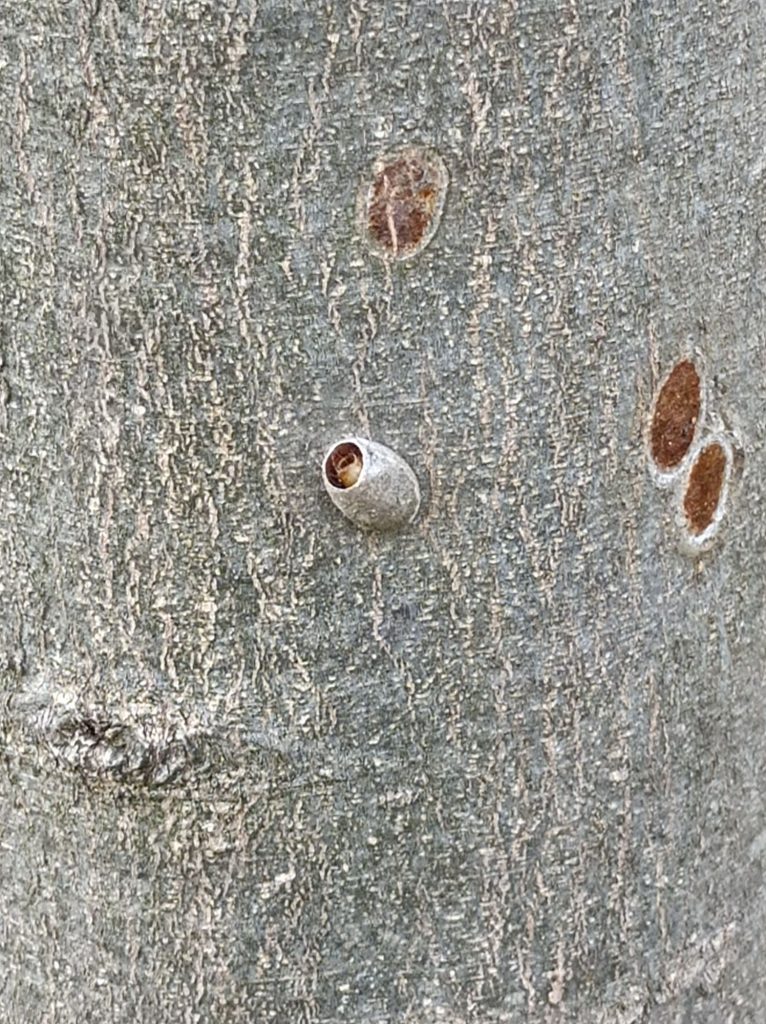
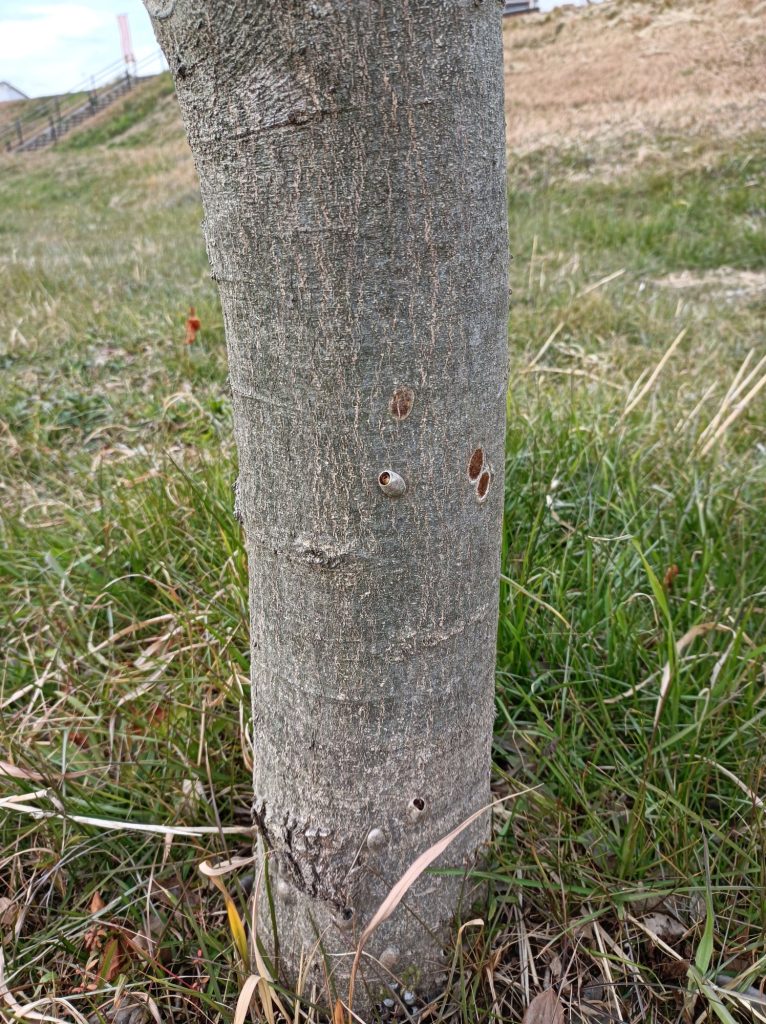
The egg-shaped thing on the tree is a bagworm moth’s cocoon. It has a wonderful camouflage coloring. It takes on the exact color and pattern of the tree it’s attached to.
Before I became interested in insects, I thought it was a tree bump or something (lol).
They are called Iraga or Iraga, but there are several species of Iraga, and this camouflaged cocoon is that of the broad-headed Iraga moth.
Another characteristic of these cocoons is that they are made relatively low in the tree.
It’s interesting to see the rows of moth cocoons, all of uniform shape and size.
Larvae of the bagworm moth, “electric bug”
The larvae of the bagworm moth are also called electric bugs, which is a cool name. I understand the urge to touch them, but please refrain from doing so.
The larvae of the bagworm moth are caterpillar-like insects with poisonous stingers that cause severe pain when touched. This pain is why they are called “electric bugs.”
This pain is not a momentary pain like static electricity, but a strong, long-lasting pain like a rash.
If you find larvae in spring or early summer, do not touch them, and be careful not to touch them as there are larvae inside the cocoons in winter.
Other insect observations
Hibernating insects, such as the grasshoppers that become active in the spring, are likely spending the winter quietly somewhere along the Tama River riverbed.
It’s fun to try to find the hiding places of these insects even in winter.