On Konchan Net’s blog, “Little Fabre’s Insect Diary,” she shares with many people the joy of collecting and raising insects with her son.
This time, we will show you how to search for stag beetle larvae in winter.
Let’s look for stag beetle larvae!
If you are looking for stag beetle larvae, the best place to find them is where you found adult beetles in the summer. The adults there lay their eggs in rotting wood, and the larvae hatch and grow by eating the rotting wood.
So, when searching for stag beetle larvae, first look for rotting wood at your feet. In particular, rotting wood that is moderately moist and soft is a good target.
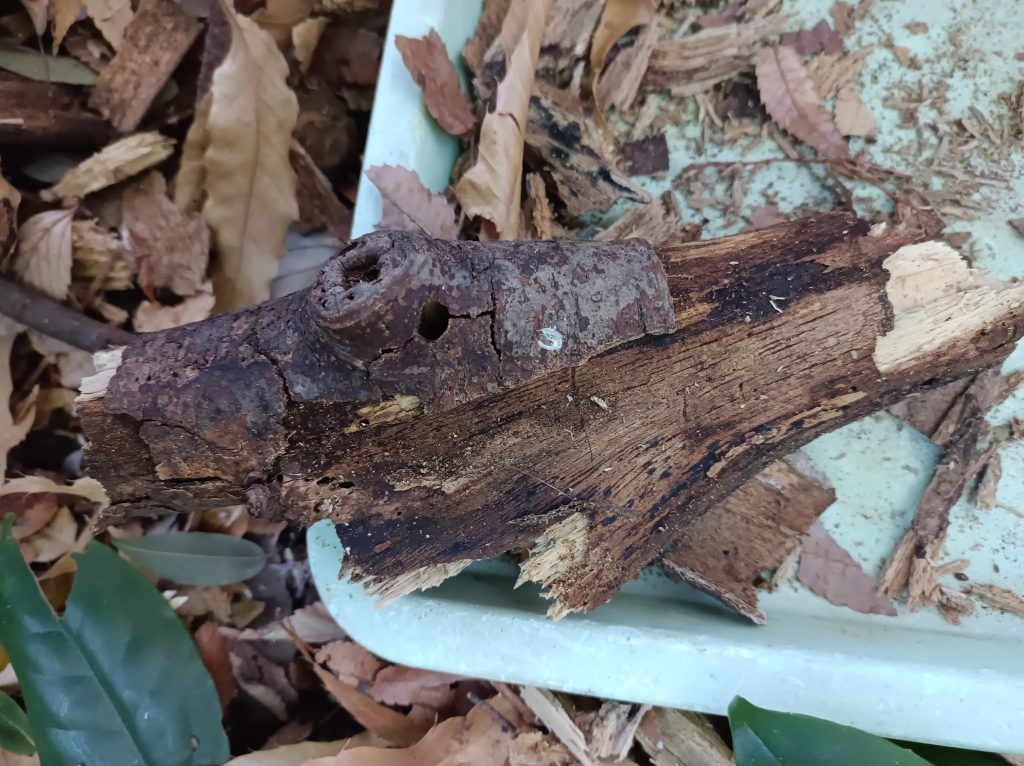
I found some rotten wood! There’s also a hole on the outside! This may be the mark of a female stag beetle digging into the wood to lay eggs. My hopes are high!
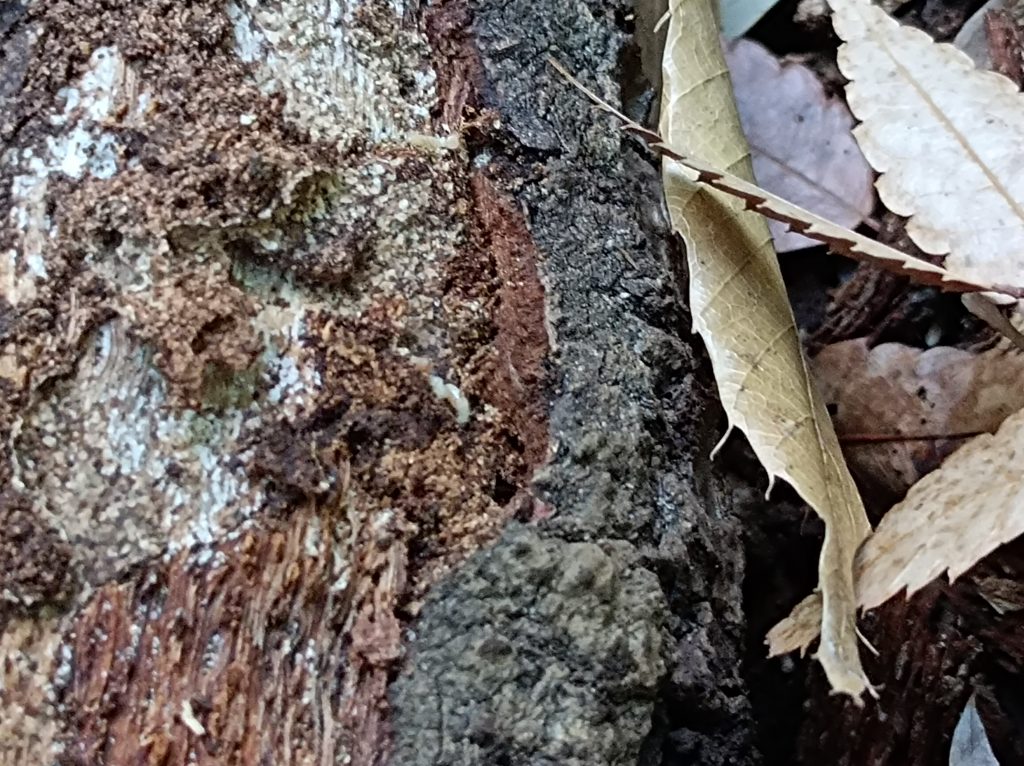
When you touch it, you can see that the wood is so rotten that the bark on the surface peels off easily! This makes it easy for adult stag beetles to dig, and it is also a good environment for larvae to live in. Our expectations are rising!
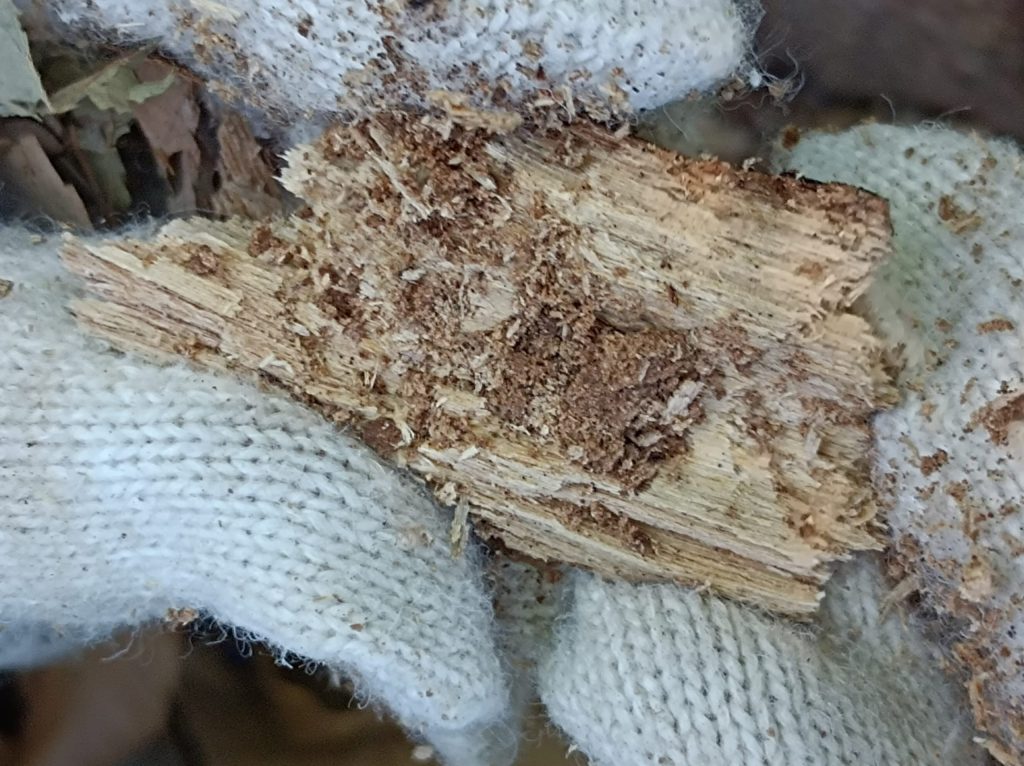
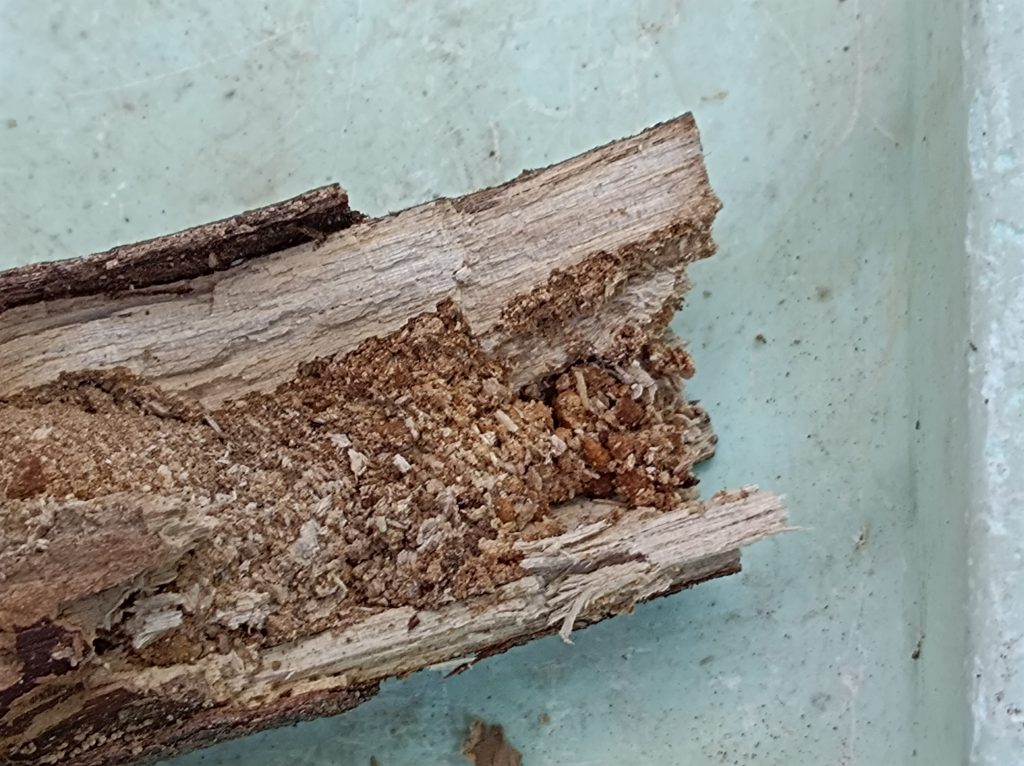
When I split the rotten wood, I found a cavity inside! This is called a feeding mark, and is the mark made by an adult rhinoceros beetle digging to lay its eggs, or by a stag beetle larva eating its food. There’s a good chance that there are larvae inside!
Digging further carefully, I discovered droppings! This was definitely from a larva! The larvae were almost there!
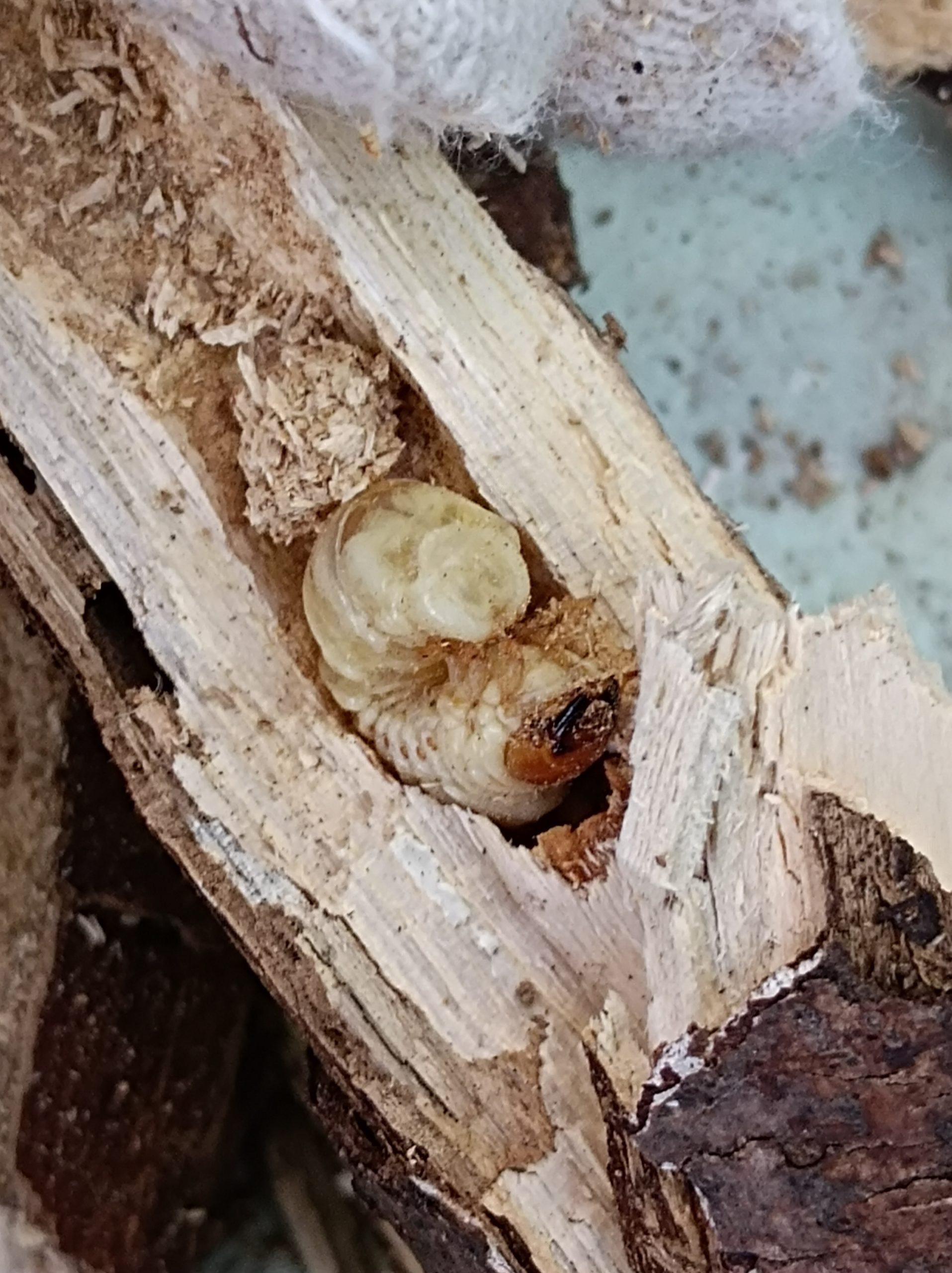
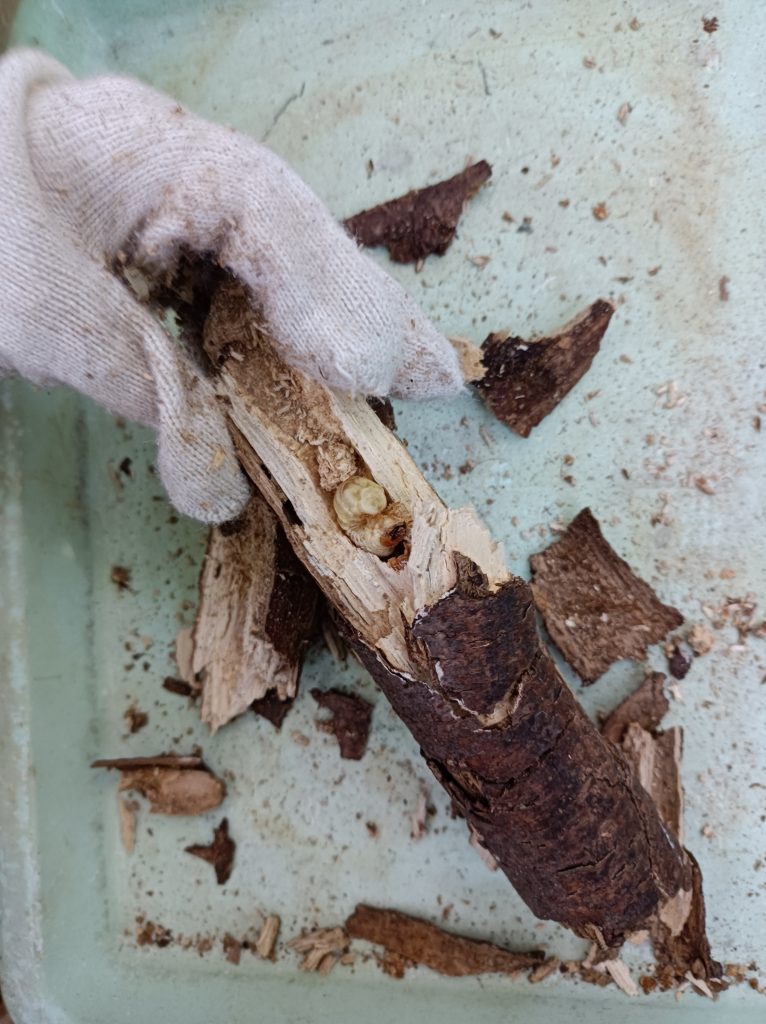
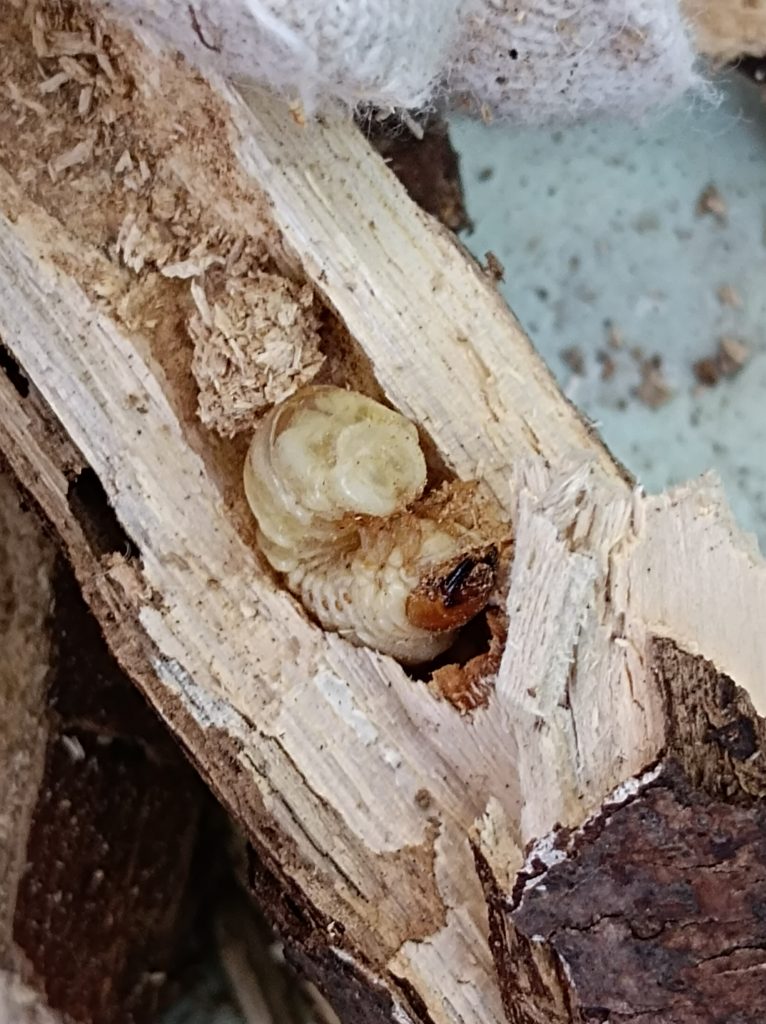
Finally, we found the larva! What do you think of this magnificent larva? You can’t help but stare at it!
Summary of how to find stag beetle larvae
Now, let’s summarize what we’ve covered so far and summarize the important points to keep in mind when finding stag beetle larvae!
Search area
This is the location where I found an adult stag beetle in the summer. The presence of an adult beetle means that there is a high possibility that eggs are being laid nearby.
Where to look
Look inside rotten wood. Look especially in the areas that are in contact with the ground, as these tend to absorb moisture easily and are often rotten.
How to choose good rotten wood
The best wood is rotten wood that is moist and soft enough that the bark can be easily peeled off by touching it with your hands. Dry, crusty wood is unlikely to contain larvae.
Characteristics (appearance) of rotten wood that is likely to have stag beetles
There may be holes on the outside that are less than 1 cm in diameter,
which may be the remains of adult insects digging to lay eggs.
Characteristics of rotten wood that is likely to have stag beetles (inside)
When you split open rotten wood, you may find cavities (feeding marks) inside. These are traces of larvae feeding on the rotten wood. Also, if the wood is in finely broken flakes or you find droppings inside, it is likely that larvae are present.
What kind of larva did you find? The candidates are rhinoceros beetle, stag beetle, and flower chafer.
What kind of caterpillar did you find?
Similar looking larvae include beetle larvae such as rhinoceros beetles, stag beetles, flower beetles, scarab beetles, and scarab beetles. Let’s identify the species by comparing their characteristics.
Body size and shape
The larvae we found this time were just under 3cm long. Based on their size and thickness, it is highly likely that they are rhinoceros beetle or stag beetle larvae. However, because the size of the larva changes depending on its developmental stage, it is not possible to determine the species based on size alone.。
Judging by where you find it
In this case, we found larvae in rotting wood. In addition to stag beetles, other larvae that may develop in rotting wood include scarab beetles. Stag beetle larvae generally develop underground, but in environments where rotting wood is buried underground, they can be found in both the rotting wood and the soil.
Buttocks characteristics
The shape of the larva’s buttocks is one of the important points to distinguish between species. The buttocks of rhinoceros beetle larvae appear to be split horizontally. The buttocks of flower chafer larvae are characterized by a C-shape. The buttocks of stag beetle larvae appear to be split vertically.
The rear end of the larva we found this time is split vertically, so it’s likely to be a stag beetle.
We’re looking forward to finding out the answer this summer!
If you want to know more about the characteristics of stag beetle larvae, check out an insect encyclopedia or book!
Insect encyclopedias and insect books
Which stag beetle?
The stag beetles that can be seen around here are the sawtooth stag beetle and the small stag beetle. They are often seen in the summer.
When I looked at the entrance to the rotten wood I found this time, it was quite small. This means it doesn’t seem to be a large stag beetle larva. So the first possibility is probably a small stag beetle.
I’m already excited to see what it will look like next summer!
Other insects found
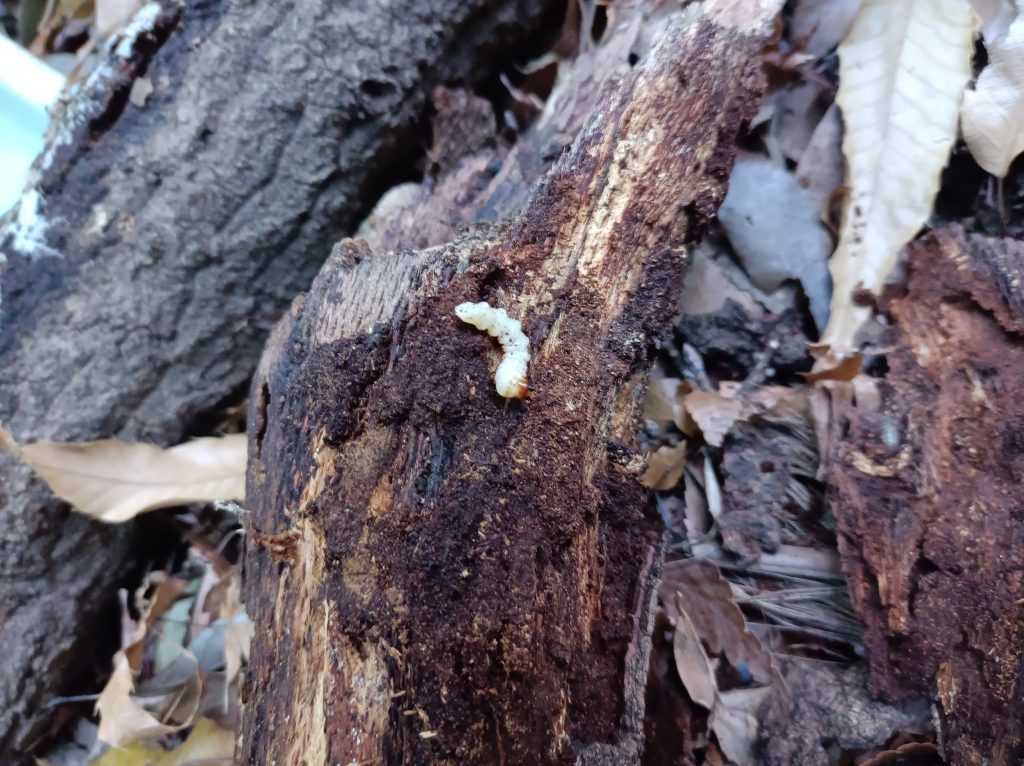
When you split open the rotten wood, you will come across a variety of insects and bugs, including centipedes, earthworms, hibernating hornets and termites, and what appear to be longhorn beetle larvae.
Things to note when searching for larvae
Insect collecting is a valuable opportunity for children to come into contact with nature. That’s why it’s so important for children’s education that adults show them how to follow the rules. Before going out to collect insects, be sure to check whether the area is permitted for collection.
If the park or other facility has a management office, you can inquire and they will be able to provide you with detailed information on whether you can collect specimens, as well as important precautions. By checking in advance, you can avoid any problems and enjoy collecting with peace of mind.
Even in parks where insect collecting is permitted, please observe the following etiquette when collecting.
- Please refrain from any actions that may damage the park’s appearance. Do not dig up the lawn or flower beds or damage the plants.
- If you dig up the soil, be sure to return it to its original state so as not to affect the surrounding environment.
- Do not touch the stump as it may be in the process of regenerating. Trying to remove it by force may stunt the plant’s growth.
Create irreplaceable memories through fun insect collecting with your children.
Take it home and try raising it!
For more information on raising stag beetle larvae, please see “How to raise stag beetles (larvae): Basic knowledge and necessary items for beginners (in preparation).”