
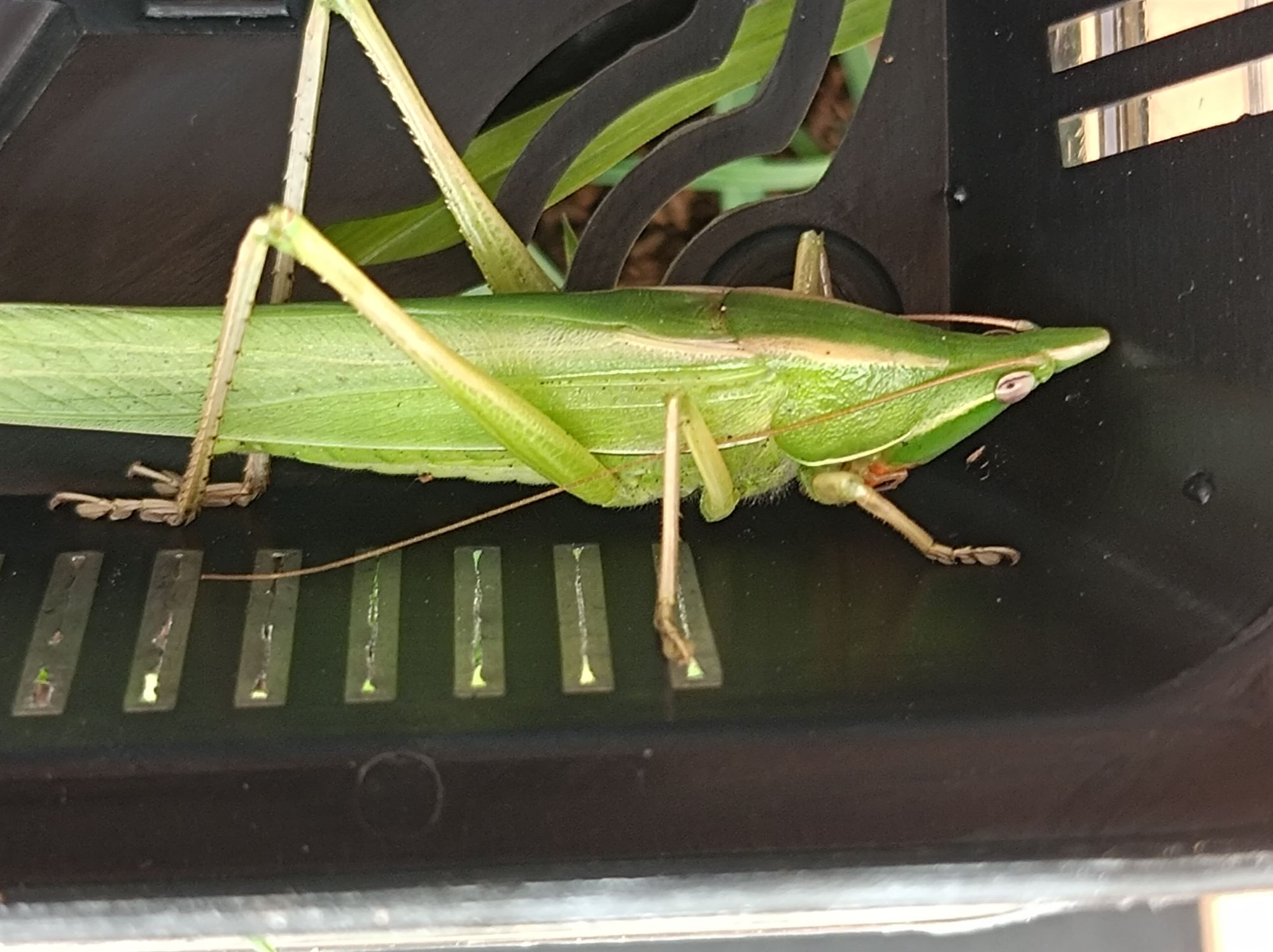
In March, when the weather is chilly, your child might suddenly exclaim, “Oh! There’s a big grasshopper!” while walking in the park or along the riverbank.
In fact, there is a rare grasshopper that begins to become active around this time of year.
This is the grasshopper, the subject of this article, the grasshopper.
Why does the grasshopper appear in early spring, when many insects are still sleeping underground?
And what preparations do you need to make to raise this rare grasshopper at home?
Many parents probably have questions like, “Isn’t insect collecting only for the summer?” and “What kind of insect is a cricket?” As
your child enters elementary school and is at the age where they’re obsessed with games and YouTube, broadening their interest in familiar creatures is a valuable learning opportunity.
Collecting and raising crickets is truly a “living educational tool” that allows you to experience firsthand the changing seasons and the mysterious ecology of living creatures.
In this article, we will provide easy-to-understand explanations of the ecology and habits of katydids, tips for collecting them, and how to care for them (including their food and lifespan)
, so that even parents and children who are new to insect keeping can begin living with them with confidence. Why not use an encounter with a katydid to spark your child’s sense of inquiry and interest in life, and embark on a wonderful experience of exploring the depths of nature together as a parent and child?
- How to find the Japanese bush warbler in March? Tips for collecting and the mysteries of its ecology
- How to raise a cricket: Keep it alive and healthy in a comfortable environment!
- The world of learning expands through raising crickets
- Summary: An encounter with the cricket opens the door for parents and children to become “biology experts”
How to find the Japanese bush warbler in March? Tips for collecting and the mysteries of its ecology
1. An early spring discovery! An unexpected encounter with a bush warbler
One day, my son came home from school and excitedly showed me his small insect cage.
Inside was an insect with a bright green body and a distinctive red mouth .
It was a grasshopper.
It was a surprising discovery for my son and I to find such an insect in March, when the weather is still cold.
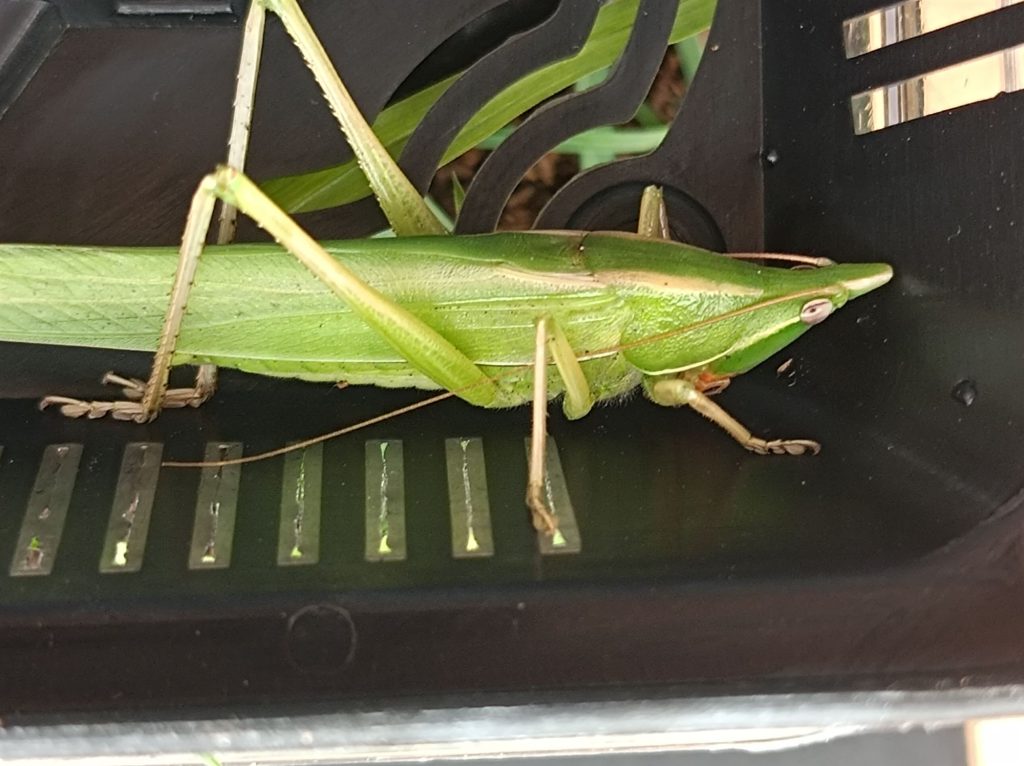
That day was a cold wave with a minimum temperature of 2°C and a maximum of 10°C, but the grasshoppers had already woken up from hibernation and were active. Perhaps the timing was right, as there had been a warm day last week with a maximum temperature of 16°C, and they emerged from the soil at that time. This is the perfect time for the phrases ” three
cold days, four warm days” (referring to the change in weather from winter to spring, when three consecutive cold days are followed by four consecutive warm days) and ” the awakening of insects ” (one of the 24 solar terms, referring to the time when insects that have been hiding underground begin to come out with the arrival of spring).
2. Unusual ecology: Why do crickets survive the winter?
Many insects survive the winter as eggs, larvae, or pupae. Among grasshoppers, it is particularly rare to see them hibernating as adults, with only a few species known to do so, such as the grasshopper moth and the ground locust .
The reason why grasshoppers survive the winter as adults is related to their lifespan and reproductive strategy.
Normally, grasshoppers reach adulthood between summer and autumn, lay eggs, and then finish their lives.
However, after reaching adulthood in autumn, grasshoppers hibernate in the soil or under fallen leaves, waking up in the spring to begin breeding.
Although they hibernate (the process by which animals survive winter), crickets are not particularly resistant to the cold.
If they are woken up by a sudden series of warm days during hibernation, and then a cold wave hits again, they may lose all their strength and die.
Therefore, safely raising crickets caught in early spring and watching over them until the warm season will help protect their lives.
3. Characteristics of the Japanese bush cricket and tips for collecting it
As its name suggests, the neck cutworm has a thin neck and a large, developed head. It also has very strong jaws, which are called “kubikiri,” which is where its name comes from . When catching one, you need to be careful not to get bitten by your fingers. My son put the neck cutworm he caught in a cage before bringing it to me, probably because he knew how strong its biting power was.
Tips for collecting crickets
When to visit: On warm days in March and April, you have a good chance of spotting them waking up from hibernation and becoming active.
Location: Look for areas with plenty of grass plants, such as riverbanks, grassy areas, park meadows, etc.
They often stay still on the grass.
Caution: When catching them, do not use your bare hands, but use gloves or a butterfly net to catch them gently.
Their strong jaws can be quite painful if you are bitten.
When small children are trying to catch them, an adult should always be present and take safety precautions.
How to raise a cricket: Keep it alive and healthy in a comfortable environment!
1. Comfortable living: Preparing the cage
When raising a cricket at home, it is important to create an environment that they can feel safe in.
The cage should be designed to replicate as closely as possible the environment in which the cricket lives in nature.
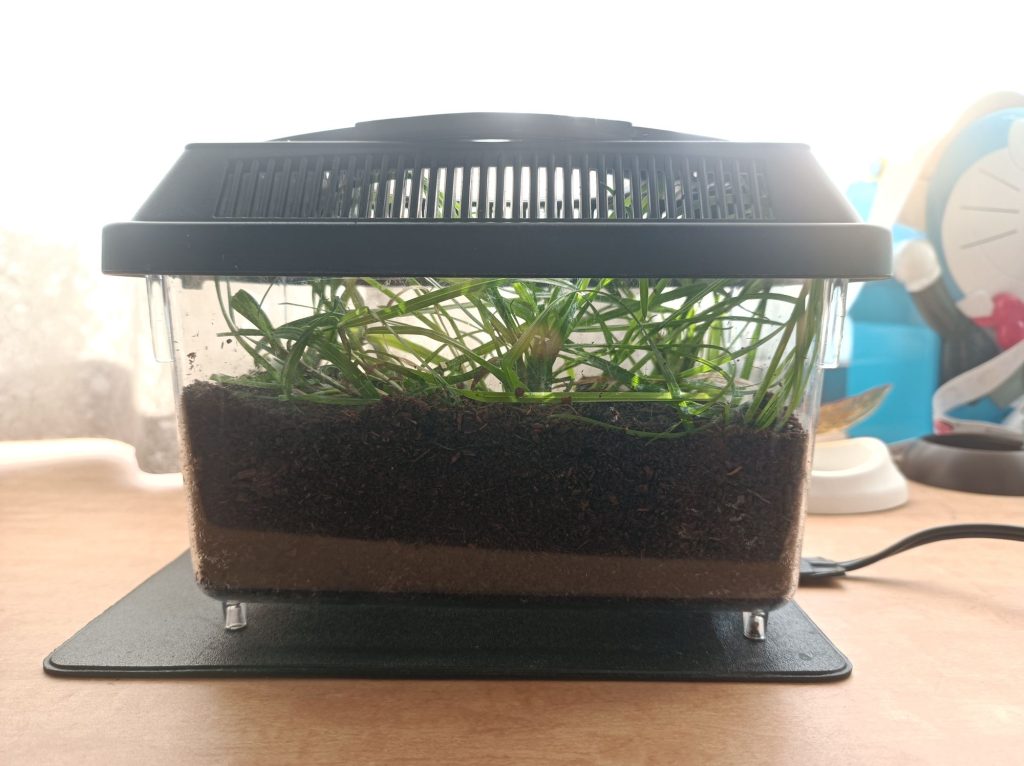
Cage type and size: A well-ventilated insect cage or plastic breeding case is suitable.
Since the cricket is relatively large and active, choose one with a certain amount of space.
A tall cage is recommended as it is easy to place plants upright.
Substrate: Place a thick layer of soil at the bottom of the cage to minimize temperature fluctuations.
Choose clean, natural soil such as leaf mold (soil made by decomposing fallen leaves with microorganisms) or insect mat. I don’t use gardening soil because it may contain pesticides.
Perches and hideouts: Since crickets often live on grass, providing them with twigs and dried leaves will give them places to hide and perch. This will
reduce stress and make them feel more natural.
2. Food of the Japanese bush warbler: What do they eat?Do they eat cabbage?
The food of the neck grasshopper is mainly plants.
With its strong jaws, it can eat a variety of plants.
It can also be raised on vegetables such as cabbage, which are easily available at home.
Their staple food is grasses: The Japanese bush warbler prefers to eat grasses ( a group of plants with long, thin leaves, such as rice, silver grass, and green foxtail). Feed them with
weeds that grow in your garden, or silver grass, green foxtail, or goosegrass that you can gather from the grass in the park.
Ideally, you should replace the leaves with fresh ones every day.
Vegetables and fruits: In addition to grasses, you can also give small pieces of lettuce, cabbage, carrots, apples, etc.
However, be sure to wash them thoroughly before giving them to your pet as they may contain pesticides.
Do they need protein?: Although they occasionally eat small insects, they primarily eat plants.
When raising them at home, it is sufficient to feed them mainly plants. This
has the advantage of eliminating the need to prepare insects and other food, and is easy to maintain hygienically.
Hydration: They can get moisture from the plants they eat, but you can make their hydration more consistent by misting the inside of their cage with water or placing damp cotton balls in it.
3. Temperature control and lifespan: Seasons spent with the cricket
The grasshopper is a rare insect that overwinters as an adult, but it still requires proper temperature control.
Suitable temperature: If you start raising them in March after hibernation, it is safest to keep them at room temperature.
Avoid sudden temperature changes, and avoid sunny or overly heated places.
Lifespan: Neck grasshoppers usually hatch in early summer (around June), become adults in the fall of the same year, survive the winter, and lay eggs from spring to early summer (March to June) of the following year, completing their life cycle.
In other words, they have a lifespan of about one year.
The goal is to “keep the grasshoppers healthy until June”: When raising insects with children, it is very important to know the insect’s lifespan. This is a good opportunity to reflect on whether the raising was done properly and what improvements should have been made, which will lead to learnings for future raising and insect observation.
For parents and children raising grasshoppers for the first time, it is a good idea to set the goal of “keeping them healthy until June . “
There are some stories of people who have been able to raise them for two years, but this is a rare case.
Observe egg laying: From spring to early summer, you may be able to observe female grasshoppers laying their eggs in the soil , a valuable learning experience about the cycle of life.
The world of learning expands through raising crickets
1. Feel the change of seasons and the wisdom of living things
Raising grasshoppers is more than just raising insects; it also teaches your children about the changing seasons and the amazing wisdom of living things.
Hibernation as a survival strategy: By learning about the unusual life cycle of the grasshopper, which survives the cold winter as an adult, we realize that insects have a variety of survival strategies to adapt to harsh natural environments.
Experience the three colds and four warms: By observing the grasshoppers’ activity up close during the “three colds and four warms” period in March, you can experience firsthand the close relationship between the weather and the activities of living creatures.
This is a much more impressive lesson than simply learning it from a textbook.
Cycle of life: Through the life cycle of the grasshopper, from hatching to growth, overwintering, and egg-laying, you can learn about the cycle (a series of repeated processes) of life from birth to its end.
2. Developing observation skills! Everyday life with the cricket
Living with a cricket will greatly develop your child’s powers of observation.
Observe its behavior: Every day, carefully observe the behavior of your cricket, such as how it eats, burrows into the ground, and rests.
Questions such as “Why is it moving like that?” and “What is it looking for?” will stimulate your child’s sense of inquiry.
Discovering physical changes: You may also be able to discover physical changes that occur during the developmental stage, such as molting (the process by which insects shed their old skin as they grow) and egg-laying.
Stimulate the five senses: By using all five senses to observe the creatures, such as the sound of the cutworms eating and the feeling of their texture when touched, you can gain a richer learning experience.
3. A sense of responsibility and coexistence in nurturing life
Raising insects is an important opportunity for children to develop a sense of responsibility for nurturing life and an awareness of coexistence with living things.
Daily care: By caring for the cricket every day, such as changing its food, providing water, and cleaning its cage, children will develop a sense of responsibility for being responsible for its life.
Consideration for living creatures: By making efforts to make the grasshoppers comfortable and noticing any illnesses or abnormalities, children will develop consideration and kindness for living creatures.
Gratitude for nature: Thinking about the plants that grasshoppers eat and the natural environment in which they live will help you develop a sense of gratitude for the blessings of nature and the diverse living things it offers.
Summary: An encounter with the cricket opens the door for parents and children to become “biology experts”
Collecting and raising the grasshoppers was a new experience for my child and me, starting in the chilly month of March.
Our encounter with this rare grasshopper will surely pave the way for your child to become a “biology expert.”
The mysterious ecology of the bush warbler, the changing of the seasons that they teach us, and the preciousness of life –
these are “authentic experiences” that you can never get from a game, and they will become irreplaceable lessons that will be deeply engraved in your child’s mind.
The sense of responsibility that your child will develop through daily care, such as preparing food and cleaning the cage, and the kind heart that cherishes small lives will be a great asset to your child’s growth.
So, next weekend, why not go out with your kids to the grassy areas or riverbanks in your neighborhood to look for crickets? You
might find one that has just woken up from hibernation and is waiting for you to visit.